

PSA Grading Guide 2026: Is It Worth Grading Your Pokémon & TCG Cards?
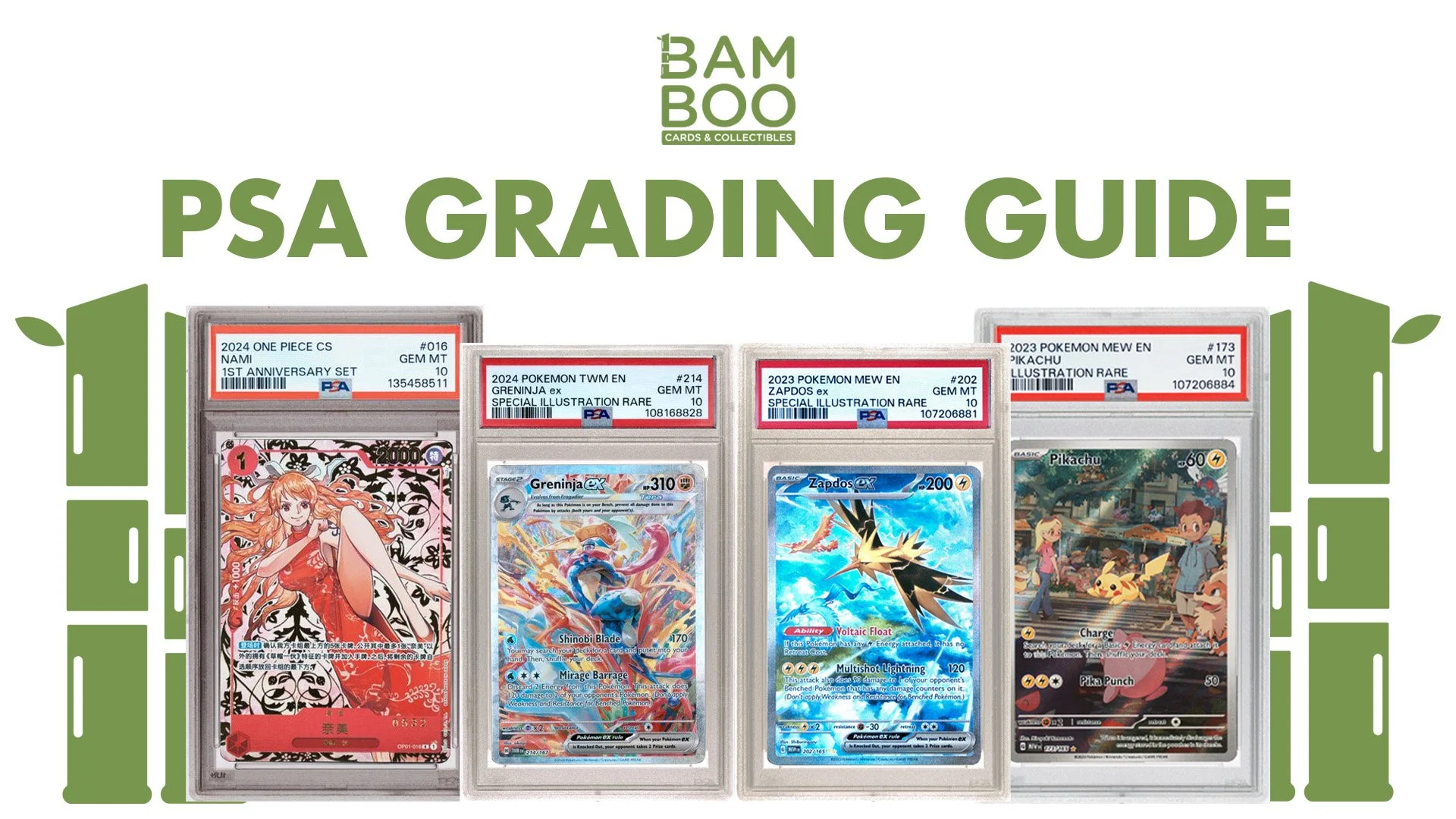
⚠️ Disclaimer: This article is for educational purposes and not financial advice. Submit at your own risk.
If you're a Pokemon card collector, you've likely wondered whether PSA grading is worth the investment. Professional card grading services like PSA can significantly increase your card's value—but only if you make smart decisions about which cards to submit. In this comprehensive guide, we'll break down everything you need to know about PSA grading for Pokemon cards, including costs, turnaround times, and whether your cards are worth the investment.
What is PSA Grading?
PSA (Professional Sports Authenticator) is the most recognized third-party card grading service in the collectibles industry. When you submit a Pokemon card to PSA, their experts evaluate its condition based on factors like centering, corners, edges, and surface quality. The card is then sealed in a tamper-evident protective case with a label displaying its grade on a 1-10 scale.
PSA grading serves three main purposes:
Authentication: Verifies your card is genuine and not counterfeit
Preservation: Protects the card in a sealed, archival-quality case
Value establishment: Provides an objective condition assessment that buyers trust
PSA-graded cards typically command higher prices than raw (ungraded) cards because buyers have confidence in the card's condition and authenticity. A PSA 10 (Gem Mint) designation can increase a card's value by 2-10x compared to its raw counterpart.
PSA Grading Scale Explained
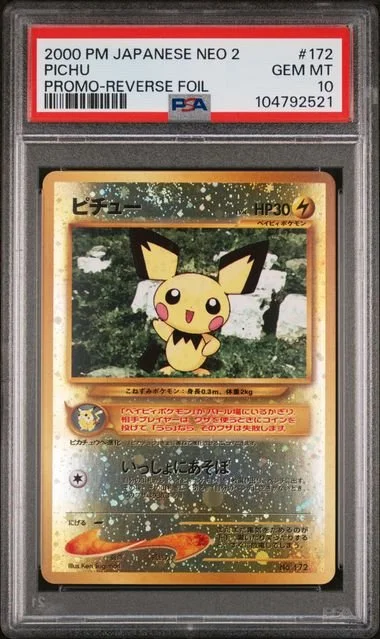
PSA uses a 10-point grading scale, with 10 being perfect (or near-perfect) condition.
Here's what each grade means:
PSA 10 - Gem Mint: Near-perfect card with sharp corners, flawless edges, perfect centering (usually 55/45 or better), and pristine surface. These are the most valuable grades.
PSA 9 - Mint: Exceptional card with only minor flaws. May have slight centering issues (60/40 to 65/35) or one minor imperfection on corners or edges.
PSA 8 - Near Mint-Mint: Strong card with slight wear. Corners may show minor whitening, centering could be 70/30, or minor surface scratches may be present.
PSA 7 - Near Mint: Noticeable wear but still well-preserved. Corners may have light wear, centering issues around 75/25, or light scratches visible.
PSA 6 - Excellent-Mint: Visible wear on corners and edges, centering issues, or surface imperfections, but no creases.
PSA 5 and below: Significant wear, poor centering, creases, or major surface damage. Generally not worth grading modern cards at these levels.
For Pokemon cards, the difference between a PSA 9 and PSA 10 can be hundreds or even thousands of dollars for high-value cards. The jump from PSA 8 to PSA 9 is also significant, while grades below PSA 7 rarely add value over raw cards.
How Much Does PSA Grading Cost in 2025?
PSA pricing has evolved significantly over the years. As of Jan 2026, here are the current general service levels:
Regular Service ($74.99/Card):
Maxed Insured value up to $1,500
20 business day turnaround*
Express Service ($149.00/Card):
Maxed Insured value up to $2,500
15 business day turnaround*
Super Express and Walk-Through: $300-$1,000+ per card for high-value cards requiring faster service.
Value Service ($27.99/Card):
Maxed Insured value up to $500
75 business day turnaround*
Value Plus ($44.99/Card):
Maxed Insured value up to $999
40 business day turnaround*
Value MAX ($59.99/Card):
Maxed Insured value up to $1000
30 business day turnaround*
Additional Costs to Consider:
Shipping to PSA: $15-50 depending on insurance and tracking value
Upcharge Fees: Cards that exceed insured value may incur additional fees after grading is complete
Return Shipping: Included in most service levels
PSA Collectors Club Membership: Some service levels require membership ($149-199/year)
Pro Tip: Bulk submissions can save money. If you're grading 20+ cards, consider joining group submissions through local card shops or online communities to split shipping costs. Alternatively, the PSA Collectors Club membership can pay for itself if you submit regularly, as it provides access to lower-cost service tiers and eliminates per-order fees.
PSA Turnaround Times
Current turnaround times fluctuate based on PSA's submission volume, but here's what to expect in 2026:
Value Service: 3-4 months
Value Plus: 2-3.5 months
Regular Service: 2-3 months
Express: 1-2 month
Super Express: 1-4 weeks
Important Notes:
These are business days, not calendar days
Turnaround times don't include shipping
During busy periods (new set releases, holidays), expect delays
Cards requiring additional review may take longer
If you're grading cards for an upcoming sale or event, plan accordingly and add buffer time. We've seen submissions take 4-5 months during peak periods.
Cards Card People Commonly Grade
Cards That Grade Well:
Some Pack-fresh modern cards pulled carefully and sleeved immediately
Well-preserved vintage cards with strong centering
Japanese exclusive cards in high demand
Error cards or variations
Candidates for Grading:
Raw card value: $50+ (vintage) or $30+ (modern)
Near-perfect condition (you believe it's PSA 9 or 10)
Strong market demand and liquidity
Cards you plan to sell (not personal collection pieces)
Vintage WOTC Cards (1999-2003):
Base Set holos (Charizard, Blastoise, Venusaur)
1st Edition cards from any set
Shadowless holos
Neo series holos
E-Reader series cards
Modern Chase Cards:
Alternate Art cards from recent sets
Secret Rare Charizards
Full Art Trainer cards
Rainbow Rare GX/VMAX/VSTAR cards
Cards from popular sets (Evolving Skies, Crown Zenith)
Cards Card People Commonly DO NOT Grade
Low-Value Commons and Uncommons: Even at PSA 10, most common cards sell for less than grading costs. A PSA 10 common might sell for $5-10, making your $35 investment a loss.
Damaged or Played Cards: If your card has visible whitening on corners, edge wear, scratches, creases, or poor centering (worse than 70/30), it won't grade high enough to justify costs. PSA 7 or below rarely adds value to modern cards.
Heavily Printed Modern Cards: Mass-printed cards from recent sets with low raw values ($5-15) typically won't have enough upside even at PSA 10.
Cards with Terrible Centering: If your card's image is obviously off-center (you can eyeball 80/20 or worse), it caps at PSA 8 maximum. Check centering before submitting.
Personal Collection Pieces: If you're never planning to sell and just want the card protected, use a quality toploader or magnetic case instead. Save grading for cards with resale potential.
Red Flags:
Raw card worth less than $25
Visible damage or wear
Poor centering noticeable to the naked eye
Card from an overprinted set with no special attribute
You're grading for sentimental reasons only
Disclaimer: At the end of the day, submit at your own risk.
How to Submit Cards to PSA
Ready to submit? Here's the step-by-step process:
Step 4: Package Safely
Use a sturdy cardboard box
Sandwich cards between cardboard sheets
Include bubble wrap and padding
Never ship cards loose or in toploaders
Step 5: Ship with Insurance
Use USPS Priority with insurance, UPS, or FedEx
Insure for full declared value & Include tracking number
Keep all receipts
Step 6: Track Your Submission
Monitor status on PSA website
Grades typically posted before cards ship back
Cards return via insured shipping
Step 1: Prepare Your Cards
Use card savers (not toploaders) for submission
Do not use penny sleeves or tape
Write card details on the card saver in pencil
Handle cards by edges only with clean hands
Step 2: Create PSA Account
Visit PSA's official website
Register for an account
Choose membership level if required for your service tier
Step 3: Complete Submission Form
Declare accurate card values (this determines insurance)
Select service level based on value and urgency
Provide detailed card descriptions (set, card number, language)
PSA vs. CGC vs. BGS vs. TAG: Which is Best?
Three major grading companies dominate the Pokemon card market. Here's how they compare:
PSA (Professional Sports Authenticator)
Market Share: Highest recognition and liquidity
Grading Scale: 1-10, whole numbers only
Label: Clean, classic design preferred by collectors
Pricing: Mid-range ($25-75 for most cards)
Best For: Maximum resale value, vintage cards, investment-grade pieces
BGS (Beckett Grading Services)
Market Share: Strong in sports cards, less dominant in Pokemon
Grading Scale: 1-10 with subgrades (centering, corners, edges, surface)
Label: Detailed but some find it visually busy
Pricing: Similar to PSA
Best For: Cards where subgrades tell a story (95/5 centering but perfect everywhere else)
Note: BGS 10 "Black Label" is rarer than PSA 10 and commands huge premiums, but harder to achieve
CGC (Certified Guaranty Company)
Market Share: Newer to Pokemon (2020), growing rapidly
Grading Scale: 1-10 with half grades (8.5, 9.5, etc.)
Label: Modern design, some prefer it
Pricing: Typically cheaper than PSA ($20-30 range)
Best For: Budget grading, personal collection, cards on the PSA 9/10 border
Advantage: Half grades mean a card might get CGC 9.5 instead of PSA 9
TAG (Technical Authentication & Grading)
Market Share: Newest major player (launched 2023), rapidly gaining traction
Grading Scale: 1-10 with unique features like pristine 10+ grade
Label: Modern, sleek design with enhanced security features
Pricing: Competitive ($18-40 for most services)
Turnaround: Often faster than PSA (2-4 weeks for standard service)
Best For: Modern cards, collectors wanting faster service, cards that might be between grades
Unique Feature: TAG offers a "Pristine 10+" grade for absolutely flawless cards, creating a tier above standard 10s
Growing Recognition: Increasingly accepted by collectors, especially for modern sets
Our Recommendation: For Pokemon cards you plan to sell, PSA is still the gold standard. PSA 10s command the highest premiums, and buyers actively search for PSA-graded cards. However, the grading landscape is evolving:
For maximum resale value: PSA remains king
For budget-conscious grading: CGC or TAG offer cheaper options with respectable recognition
For fastest turnaround: TAG typically beats PSA by 4-8 weeks
For high-end vintage with centering issues: BGS subgrades can explain why a card graded lower
For modern cards: TAG and CGC are gaining ground and may offer better value
Important Note: While TAG and CGC cards typically sell for 10-20% less than equivalent PSA grades today, this gap is narrowing as more collectors accept alternative grading companies. If you're grading for personal collection rather than immediate resale, TAG's faster service and lower costs make it an attractive option.
Common PSA Grading Mistakes to Avoid
Don't waste money on these common errors:
1. Overestimating Your Card's Condition Most people think their cards are PSA 9-10 when they're realistically PSA 7-8. Use a jeweler's loupe to check for micro-scratches and inspect centering carefully before submitting.
2. Not Checking Centering First Print a centering template or use a ruler. Cards with 75/25 or worse centering won't get PSA 10 and often cap at PSA 8. Don't waste money grading poorly centered cards unless they're extremely valuable.
My Go-To Tool for Centering: After years of grading cards, I've learned the hard way that eyeballing centering just doesn't cut it. I've wasted hundreds of dollars sending in cards I thought were perfectly centered, only to get them back as PSA 8s.
I personally use The GradeMaster before every submission now, and it's saved me time when grading. You can find it on eBay by searching for "GradeMaster Centering Tool" or visiting this link to The GradeMaster on eBay. (Disclaimer: I'm not affiliated with this product—I just genuinely find it useful and recommend it based on my own experience.)
3. Submitting Low-Value Cards That $8 rare Pokemon card won't make financial sense even at PSA 10. Only grade cards where the PSA 10 value is at least 3-4x your total grading investment.
4. Improper Packaging Using toploaders (they can damage cards during transit), excessive tape, or insufficient protection can damage your cards before PSA even sees them. Always use card savers and proper padding.
5. Incorrect Declared Values Undervaluing cards to save on grading costs can leave you underinsured if cards are lost. Overvaluing triggers more expensive service tiers. Research recent sold prices on eBay or TCGPlayer and declare honestly.
6. Not Researching Market Demand Just because a card grades PSA 10 doesn't mean buyers want it. Check eBay sold listings to see if PSA 10 versions actually sell before submitting. If you're planning to resell it, you may find it difficult to move, leaving you stuck holding the card and out the grading fees.
7. Grading for Sentiment Your childhood Pikachu has personal value, but that doesn't justify $35+ to grade it unless you're grading purely for personal enjoyment, not for any monetary return.
8. Ignoring Turnaround Times Need cards back for a show or sale? Express service exists for a reason. Don't use Value service and then complain about 3-month waits.
9. Rushing Fresh Pulls Modern cards can have print lines or defects not visible immediately. Inspect new pulls carefully under good lighting before submitting.
10. Not Using Group Submissions Submitting one card means you pay full shipping both ways. Join group submissions through local shops or online communities to split costs across 20-50+ cards.
Conclusion
PSA grading can significantly increase your Pokemon card values, but only when done strategically. Focus on high-value cards in excellent condition, understand the grading scale, and calculate your break-even point before submitting. Remember: grading is an investment, not a guarantee of profit.
Related Articles:
External Resources: